


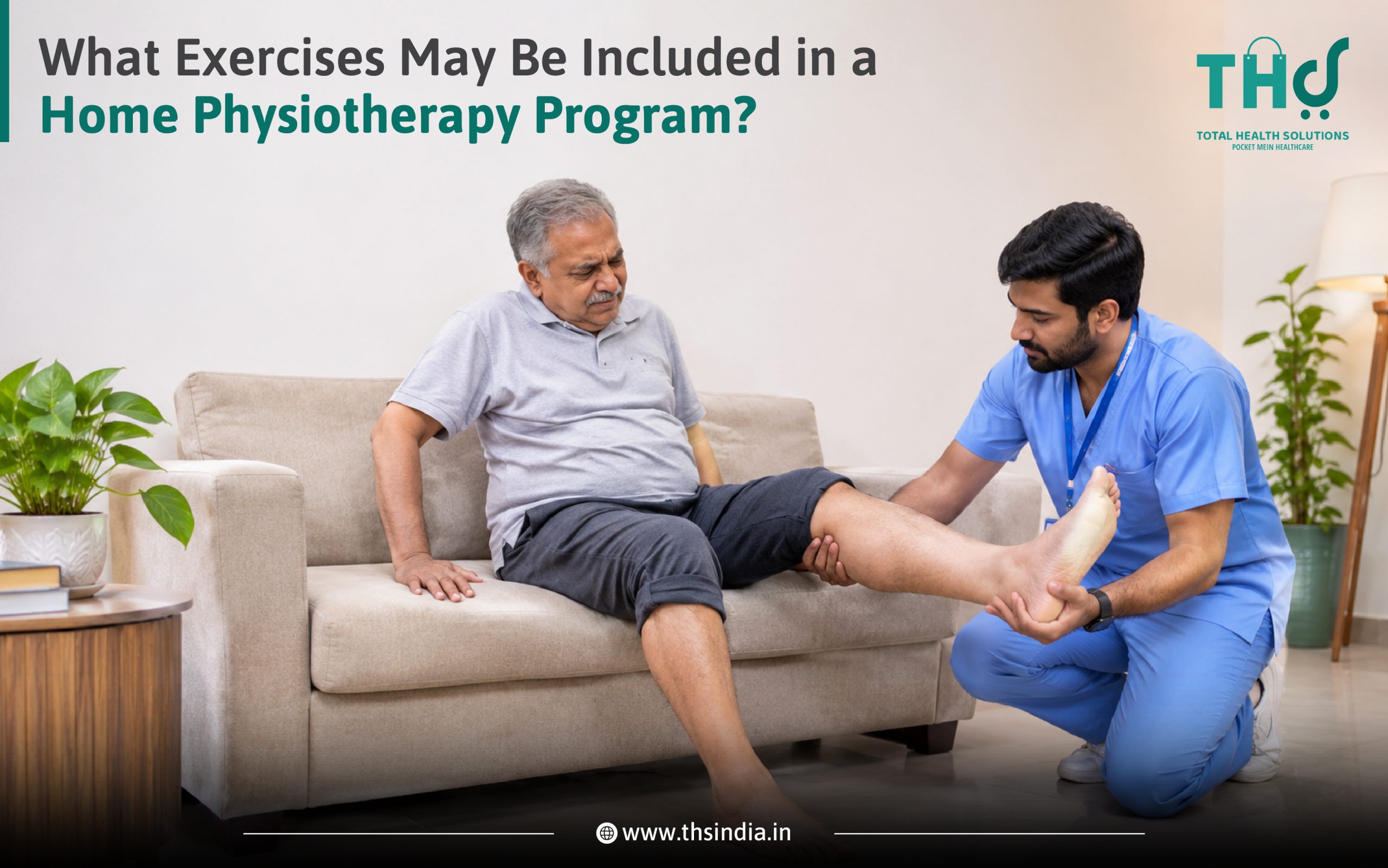
After surgery, an injury, or an illness, the body may not move as easily as it did before. A person who could walk without help may now need someone by their side. Even simple things like getting out of bed or bending a knee can take extra effort. Physiotherapy helps patients deal with these difficulties through exercises that suit their condition and current level of movement.
There is no fixed set of exercises for everyone. A patient with knee stiffness may need to practise bending and straightening the leg, whereas someone recovering from a stroke may need to work on balance, walking, or hand movements. The physiotherapist decides what to include based on what the patient is experiencing. Some exercises that are often used during home physiotherapy services are discussed below.
Assessment Before Starting Physiotherapy
Before deciding which exercises to begin with, the physiotherapist checks what the patient is comfortable doing. Can they stand without holding onto something? Does bending the knee cause pain? Can they lift an arm or walk a few steps without help? These are some of the things that help the physiotherapist understand the patient’s movement difficulties.
The patient’s medical history is also important. Someone who has recently undergone surgery may not be able to perform certain movements yet. A person with back pain, on the other hand, may find sitting for too long or bending forward uncomfortable. These details help in deciding which exercises are suitable and which movements need to be avoided.
After the assessment, the physiotherapist can work out where to start and whether the patient will need help while performing the exercises.
Breathing and Circulation Exercises
Some patients are not in a position to stand or walk during the first few days of recovery. This can happen after surgery or when someone has spent a long time in bed. In such cases, the physiotherapist may start with a few simple movements that can be done without getting out of bed.
Deep breathing is one such exercise. The patient takes a slow breath in, allows the lungs to expand, and then breathes out gently. Ankle pumps are also commonly included in rehabilitation routines. The patient points the feet away from the body and then pulls them back towards the shins. This movement helps maintain blood flow in the lower legs.
Another exercise involves tightening the thigh muscles for a few seconds and then relaxing them. The legs stay in the same position during this movement. It can be useful for patients who are not yet able to move their legs freely.
Range-of-Motion Exercises
Joint stiffness can make even routine activities uncomfortable. After knee surgery, for instance, a person may find it difficult to bend the leg while sitting. Someone with shoulder stiffness may struggle to reach for things kept on a shelf. Neck stiffness can also make turning the head uncomfortable.
Range-of-motion exercises are used to improve movement in these joints. The patient may be asked to bend and straighten the knee, move the shoulder in different directions, or turn the neck slowly from side to side.
Not everyone needs assistance with these exercises. Some patients can manage the movements on their own, while others may need the physiotherapist to guide them. This is often the case when a joint is very stiff or movement causes discomfort. The exercises should be done within the range advised by the physiotherapist, without trying to force the joint.
Strengthening Exercises
When a person is not moving around much, their muscles can become weaker. This is often noticed after surgery, an injury, or several weeks of reduced activity. Getting up from a chair, walking around the house, or climbing stairs may start feeling more difficult than before.
The physiotherapist may include exercises like these to work on muscle strength:
-
Straight Leg Raises: The patient lies on their back, keeps one knee straight, and slowly lifts the leg. After holding it briefly, they bring it back down. This exercise works the muscles at the front of the thigh.
-
Bridging: The patient lies on the bed with their knees bent and feet resting on the surface. They then lift their hips gently and lower them again. This exercise works the hip and gluteal muscles.
-
Quadriceps Tightening: The patient keeps the leg straight and tightens the muscles at the front of the thigh for a few seconds before relaxing. It is often included in exercises for people recovering from knee problems or surgery.
The number of repetitions will depend on how much the patient can comfortably manage. Someone who has recently undergone surgery may start with just a few repetitions. The physiotherapist can increase them when the patient is ready.
Balance and Walking Practice
Walking may feel different after an injury or a long period of illness. Some patients feel hesitant when putting weight on one leg, while others find it difficult to stand steadily or turn without support. These problems are also seen in older adults and people recovering from a stroke.
To help with this, the physiotherapist may ask patients to practise standing, shifting their weight from one leg to another, or taking small steps. These movements help them become more comfortable while standing and walking.
Some patients may need a walker or walking stick until they can walk more confidently. During practice, the physiotherapist watches how they take each step, whether they lean to one side, and how much support is needed. The walking exercises are planned around these difficulties.
Exercises for Everyday Activities
Moving a joint during an exercise does not always mean a person can use it easily in daily life. For example, a patient may be able to bend their knee while lying on the bed but still find it difficult to stand up from a chair.
Because of this, physiotherapy may also involve practising movements that patients need to do every day. They may work on getting out of bed, sitting down and standing up, walking from one room to another, or using stairs.
For someone recovering from a stroke, the exercises may involve holding a cup, picking up small objects, or using their fingers while getting dressed. These movements may seem small, but they can make a difference when a patient is trying to manage daily tasks again.
The physiotherapist chooses these activities based on what the patient struggles with at home. This way, the exercises are connected to the movements they actually need to perform.
Pain Relief and Posture Exercises
Pain in the neck, back, shoulders, or knees can affect how a person sits, stands, and moves. Some people change their posture without even realising it because they are trying to avoid discomfort. For example, someone with back pain may avoid bending, while a person with shoulder pain may start using the other arm more often.
Depending on what is causing the pain, the physiotherapist may suggest gentle stretches, controlled movements, or posture correction exercises. They may also explain how to sit comfortably at a desk, stand without putting too much pressure on the back, and avoid positions that make the pain worse.
These exercises should not increase the patient’s discomfort. If a particular movement causes more pain, the patient should speak with the physiotherapist before continuing with it.
Home Physiotherapy Services at Total Health Solutions
The exercises a patient needs can change during recovery. In the beginning, they may only be able to manage a few basic movements. As their condition improves, they may start working on walking, balance, and muscle strength. The physiotherapist checks how they are progressing and changes the exercises when necessary.
Total Health Solutions provides home physiotherapy services for patients who need rehabilitation support at home. Patients can connect with a physiotherapist to discuss their condition, movement difficulties, and recovery needs. They can receive guidance on suitable exercises based on what they can manage and the kind of support they need.